
The complete guide
A Practical Guide to Choosing Soft Close Cabinet Hinges
A cupboard door that shuts with a bang can become irritating fast. Perhaps your kitchen doors close harder than you would like, or an old hinge no longer holds a door in line. Replacing the hardware can help, but only if the new hinge matches the cabinet.
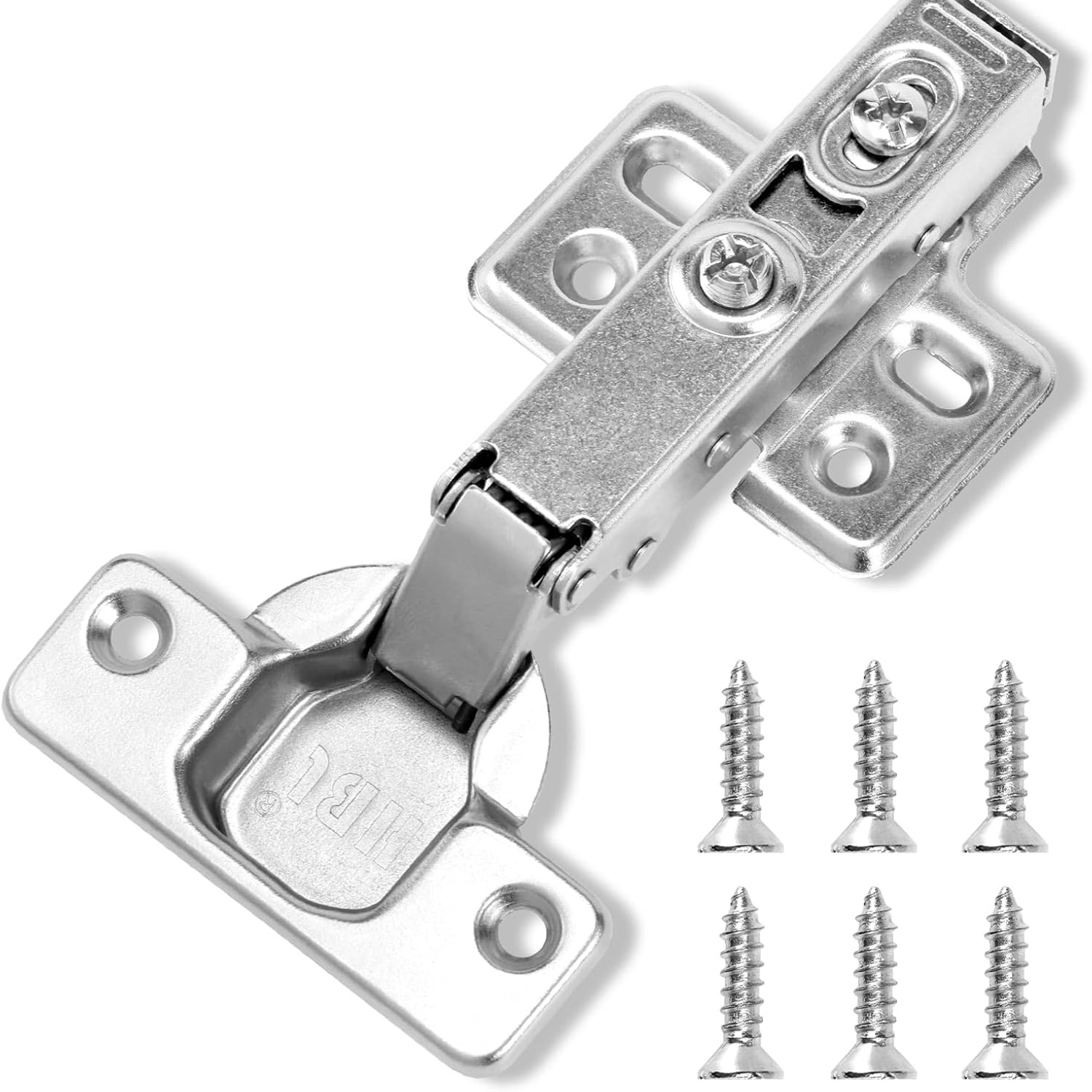
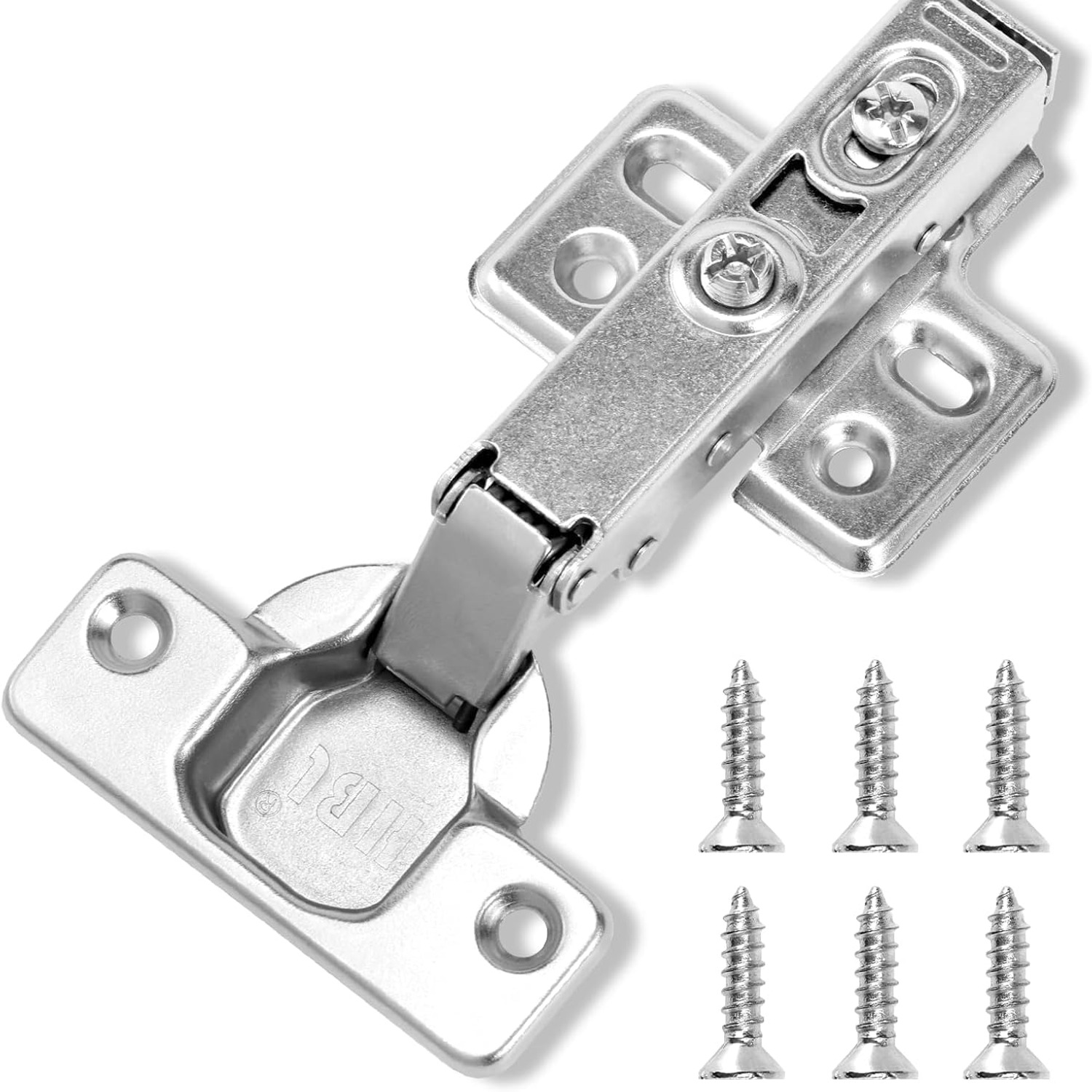
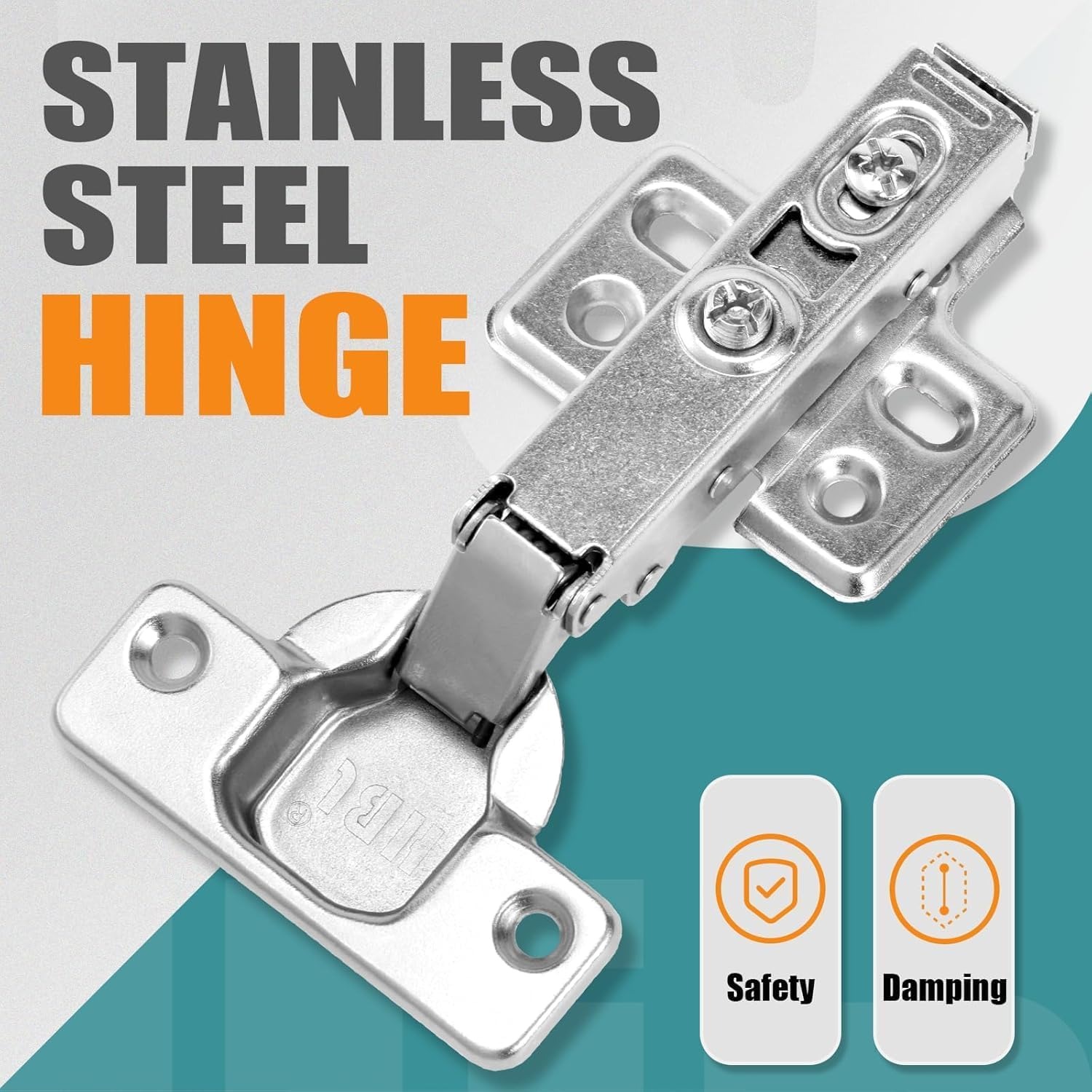
These soft close cabinet hinges combine a full overlay layout with a built-in closing mechanism. They are described as 35mm concealed hinges, supplied in a pair with screws. Their 110° opening angle, clip-on connection and three-way adjustment are useful features, but none removes the need to measure first.
This guide explains what to check before buying, how the features apply to everyday use, and where the supplied information leaves questions unanswered.
Start with how your door sits
Open a cupboard and look at the door in relation to the cabinet side panel. Then close it slowly and watch where its edge rests. This tells you more about the hinge type you need than the colour or shape of the old hardware.
A full overlay door covers the cabinet side panel when closed. A half overlay arrangement covers only part of that panel, often where two doors share a divider. An inset door sits within the cabinet opening.
This product is intended for the first arrangement. Full overlay cupboard hinges are not interchangeable with every other concealed hinge. Adjustment can help refine a correct fit, but it cannot turn one overlay type into another.
If you cannot tell which layout you have, take clear photographs of the door open and closed. Ask someone familiar with cabinet hardware to identify it before you order.
What the soft close feature changes
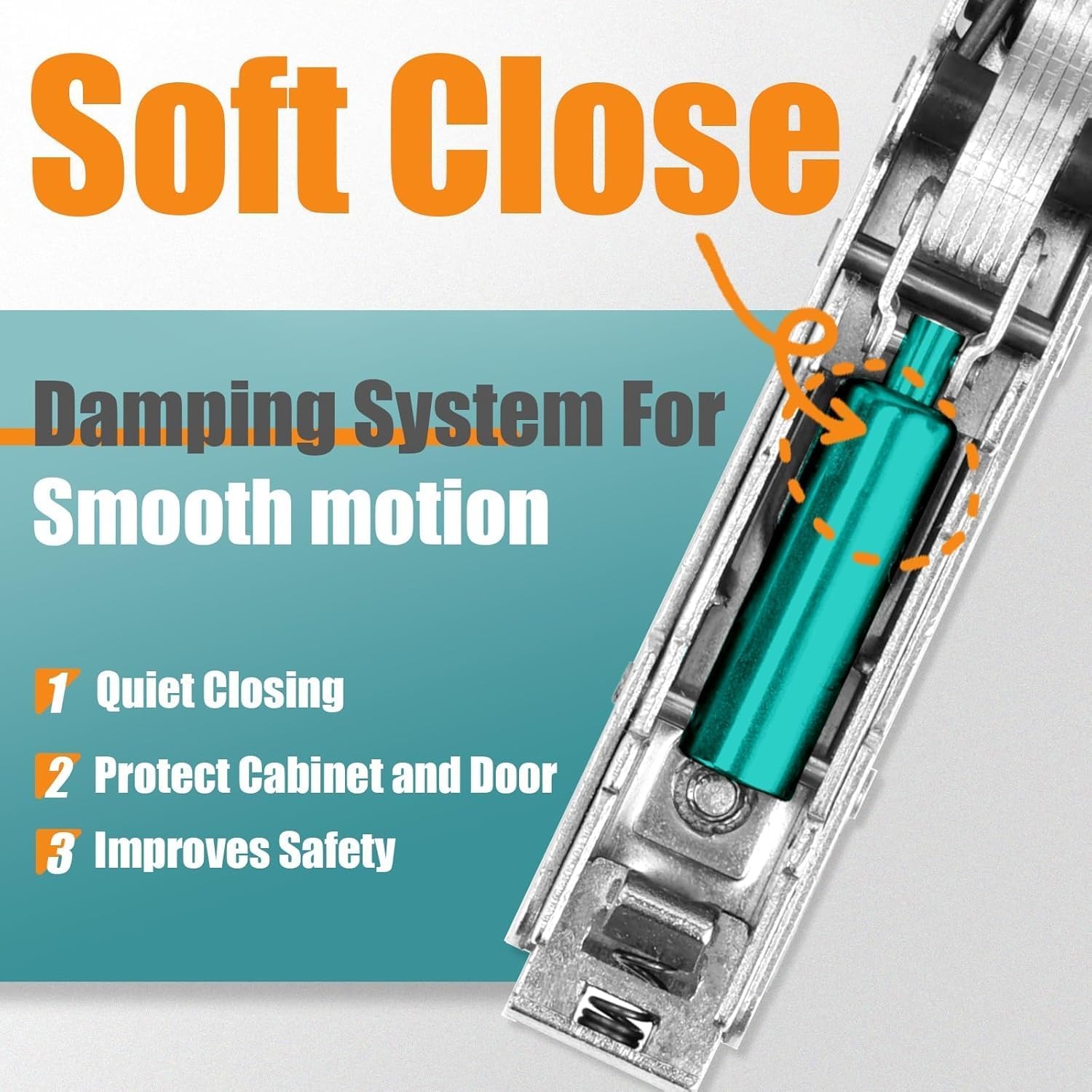
The built-in soft close mechanism slows the final part of the door's closing movement. The aim is a gentler finish instead of a hard bang against the cabinet.
That can be useful in kitchens where doors get opened and closed throughout the day. It may also appeal for a wardrobe near a sleeping area or a vanity used early in the morning.
It is still important to handle the door normally. A soft close hinge is not a lock, a door stop or a childproof fitting. Keep fingers away from hinge joints and closing edges.
The maker does not list an adjustable closing speed or a switch for turning the soft close function off. If either feature matters to your project, ask for confirmation rather than assuming it is included.
Check more than the 35mm cup size
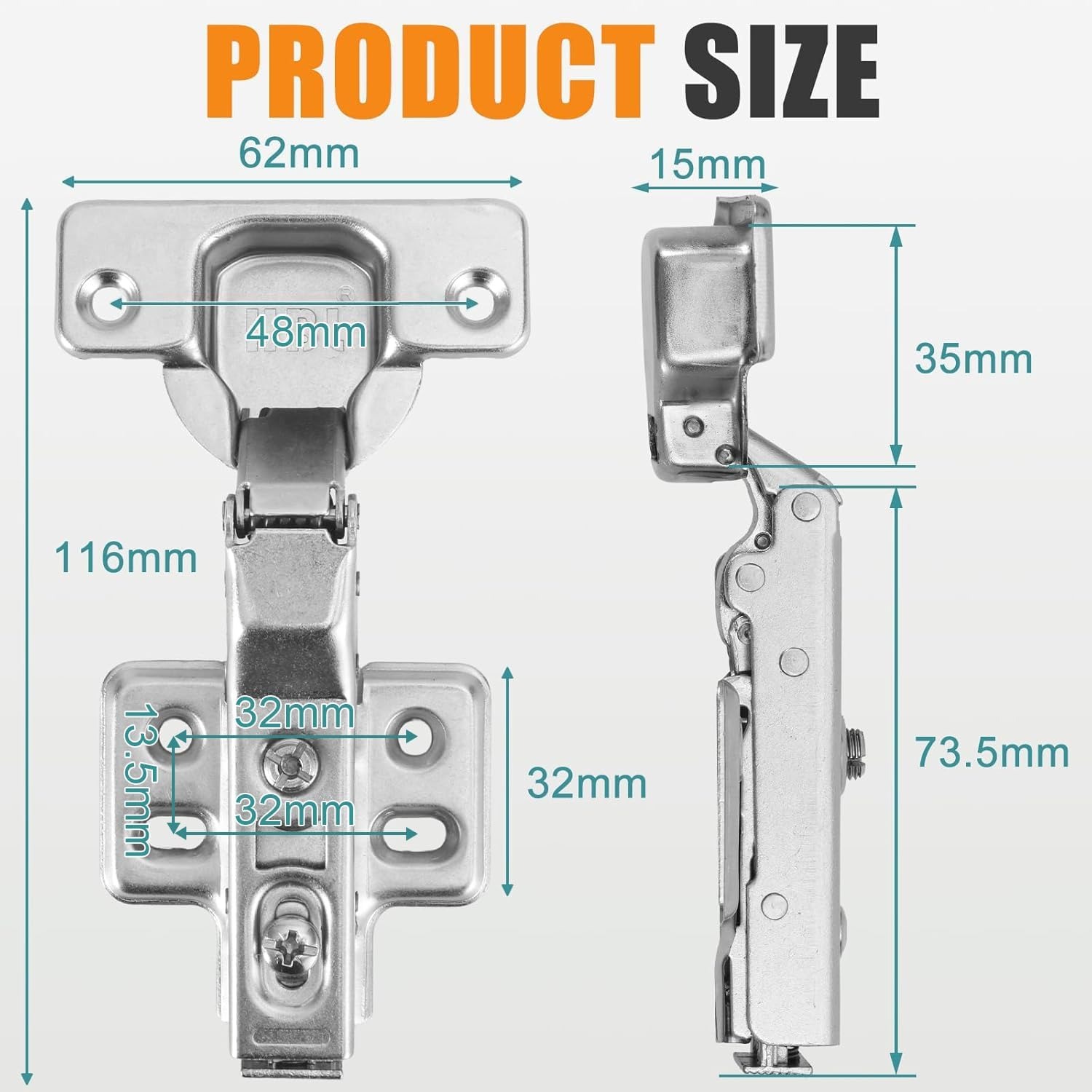
For a kitchen cupboard hinge replacement, the old cup recess is a useful starting point. Measure its diameter carefully. This product is described as a 35mm concealed hinge, but cup size is only one part of the fit.
You also need to compare the recess depth, screw-hole positions and the relationship between the cup and door edge. The cabinet-side fixing arrangement matters too. Two hinges can look much alike while placing the door differently.
The supplier details include a 10 L × 10 W mm dimension entry. That is not a complete installation drawing and should not be treated as one. It does not establish the clearances or drilling pattern needed for fitting.
Door thickness limits are also absent from the maker's listing. Before choosing replacement concealed hinges, confirm any missing measurements against your existing hardware or a suitable technical drawing.
Think about opening space
These hinges have a listed opening angle of 110°. That describes how far the hinge is designed to open, not a promise that every installed door will reach that angle without obstruction.
A wall beside the cupboard may stop the handle first. An adjacent door, internal fitting or projecting trim could also affect access. Look at the whole opening path, especially on corner cupboards or doors close to a wall.
When comparing 110 degree cabinet hinges, consider what you need to reach inside the cabinet. A wider opening is only useful if the room and cabinetry allow it.
There is no stated compatibility with pull-out shelves or internal drawers. If your cupboard has either, check their clearance requirements separately before changing the hinges.
Understand what adjustment can do
Three-way adjustment lets you move the door up and down, left and right, and in and out. These changes help bring edges into line and set a more even gap around a correctly fitted door.
Cabinet door alignment is usually easier when changes are small. Adjust one setting, close the door gently and look at the result. Large changes to several screws at once can make it hard to see what helped.
Support the door while working. If a screw hole is damaged or the cabinet panel is loose, address that problem before trying to align the door.
Adjustable cupboard hinges cannot compensate for every fault. A warped door, unsuitable mounting position or incorrect overlay may need a different repair. Stop if adjustment reaches its limit without producing a secure fit.
Separate clip-on convenience from initial fitting
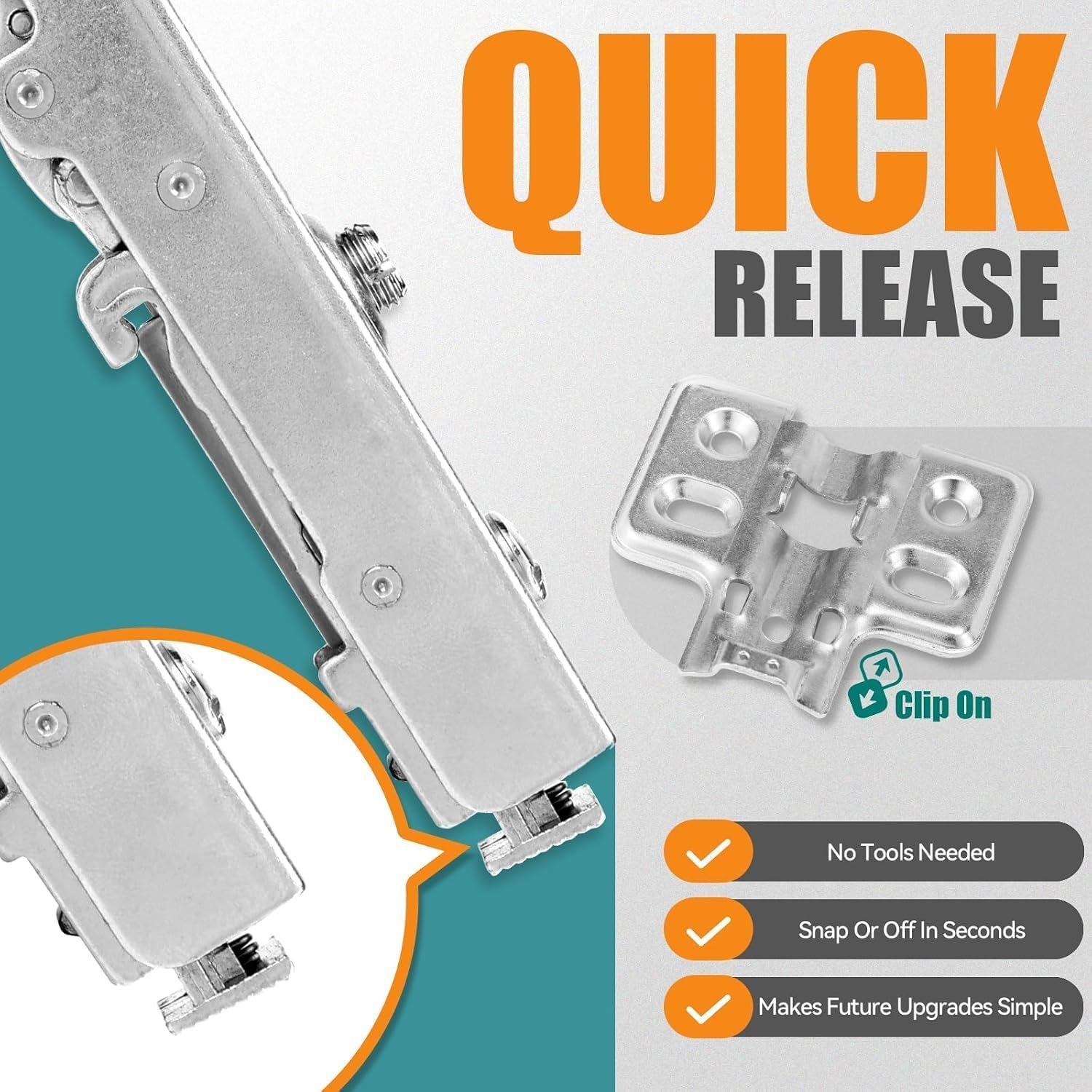
The clip-on design allows the hinge connection to be attached or released without tools. This can be helpful when removing a supported door for access or cleaning.
It does not mean the whole installation is tool-free. Mounting screws must still be fixed securely, and a new installation may require accurate drilling. Screws are included, but their measurements and suitability for different cabinet materials are not stated.
Do not assume your old mounting plates will accept the new hinges. Clip-on cabinet hinges can use different connections, even when their appearance is similar.
For a straightforward replacement, compare both sides of the old hinge assembly. If new recesses are needed, or the cabinet has damaged fixing points, experienced help is a sensible choice.
Match the pack to the project
This is a two-hinge pack. That gives you a clear starting quantity, but it does not tell you how many hinges a particular door needs.
Door height, width and weight affect hinge selection. The maker does not give a load rating or a table showing hinge quantities for different doors. Avoid assuming that two hinges are enough for a large wardrobe door simply because the pack contains two.
For wardrobe door hinges, gather the door measurements and weight before seeking fit advice. The same care applies to tall pantry doors and doors with added panels or mirrors.
If replacing only part of an existing set, confirm that the remaining hinges can work with the replacements. Matching the required movement matters more than making the visible finish look similar.
Consider the room and finish
The supplier lists metal construction and a silver finish. Kitchen cupboards, wardrobes and bathroom vanities are suggested applications, subject to the door and cabinet being compatible.
Silver cabinet hinges are mostly hidden when a compatible door is shut, but the finish will be visible when it is open. If you want a close visual match, compare the product images with the existing fittings.
For bathroom vanity hinges, consider moisture as well as fit. No corrosion rating or tested wet-area performance is provided here. Do not treat a silver finish as proof that a hinge can tolerate frequent splashing.
Wipe moisture away and avoid prolonged damp contact. If the cupboard sits in a particularly wet location, get specific suitability advice before buying.
Care after installation
Once fitted, open and close the door gently several times. Check that it moves freely, clears nearby surfaces and stays secure. Keep the area around the hinge free of objects that could catch in its movement.
For routine cleaning, use a soft cloth and dry the hardware afterwards. Avoid abrasive cleaners, soaking or spraying cleaning liquid directly into the mechanism.
Check fixing screws periodically, especially if you notice a change in alignment. Tighten carefully rather than applying extra force to a loose or damaged hole.
No lubrication schedule is supplied. Follow any care instructions included with the product, and ask before adding oil to the soft close unit. If the closing action changes, inspect the fit and fixings rather than forcing the door.
Make the final checks before ordering
A useful buying decision comes down to confirmed fit, not the longest feature list. You should know your overlay type, cup measurements, fixing layout and required door support before selecting this set.
Keep a note of the product identifiers too. The model is BL0101, while the supplier details also show manufacturer part number 1106F02. Use these alongside measurements and photographs, not as a substitute for them.
Delivery timing, warranty terms and returns conditions are not stated by the maker. Check our shipping and returns pages before purchase, particularly if your repair needs to be finished by a set date.
If anything remains unclear, resolve it before drilling or fitting. That is usually easier than correcting a mismatch afterwards.
The short version
These full overlay soft close hinges offer a 35mm concealed design, 110° opening, three-way adjustment and a clip-on connection. The pack contains two hinges with screws.
They are worth considering for compatible cupboard doors where gentler closing is the goal. Measure carefully, confirm the missing fit details and check the fixing surfaces. The right match matters more than any single feature.