
The complete guide
Choosing Lid Stay Supports for Desks, Chests and Furniture Repairs
Start with the way your furniture moves
A worn support can make an otherwise useful desk or chest hard to use. Perhaps a drop front no longer rests where it should, or an old support has bent and catches during movement. Finding a replacement starts with understanding the job of the original fitting, not just matching its colour.
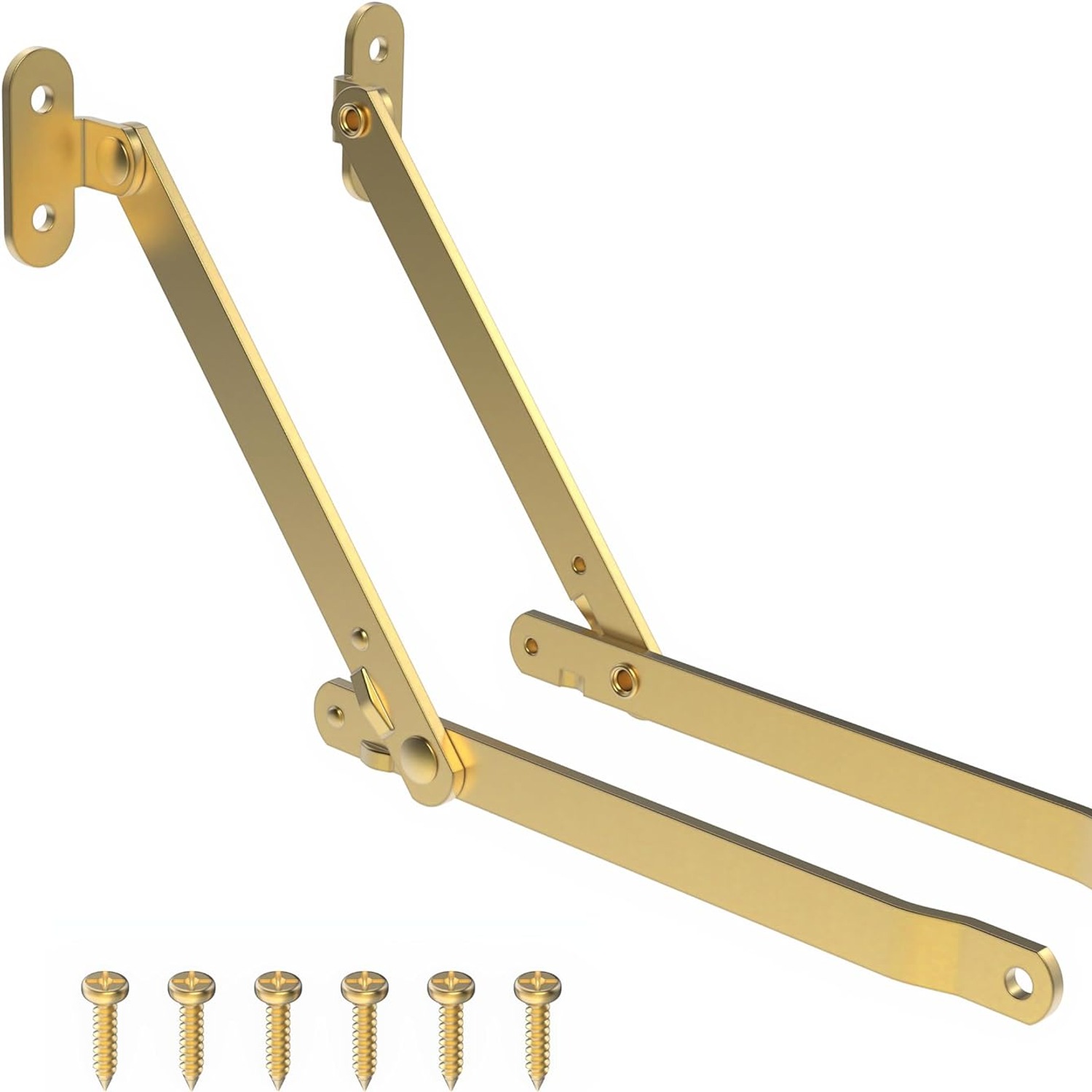
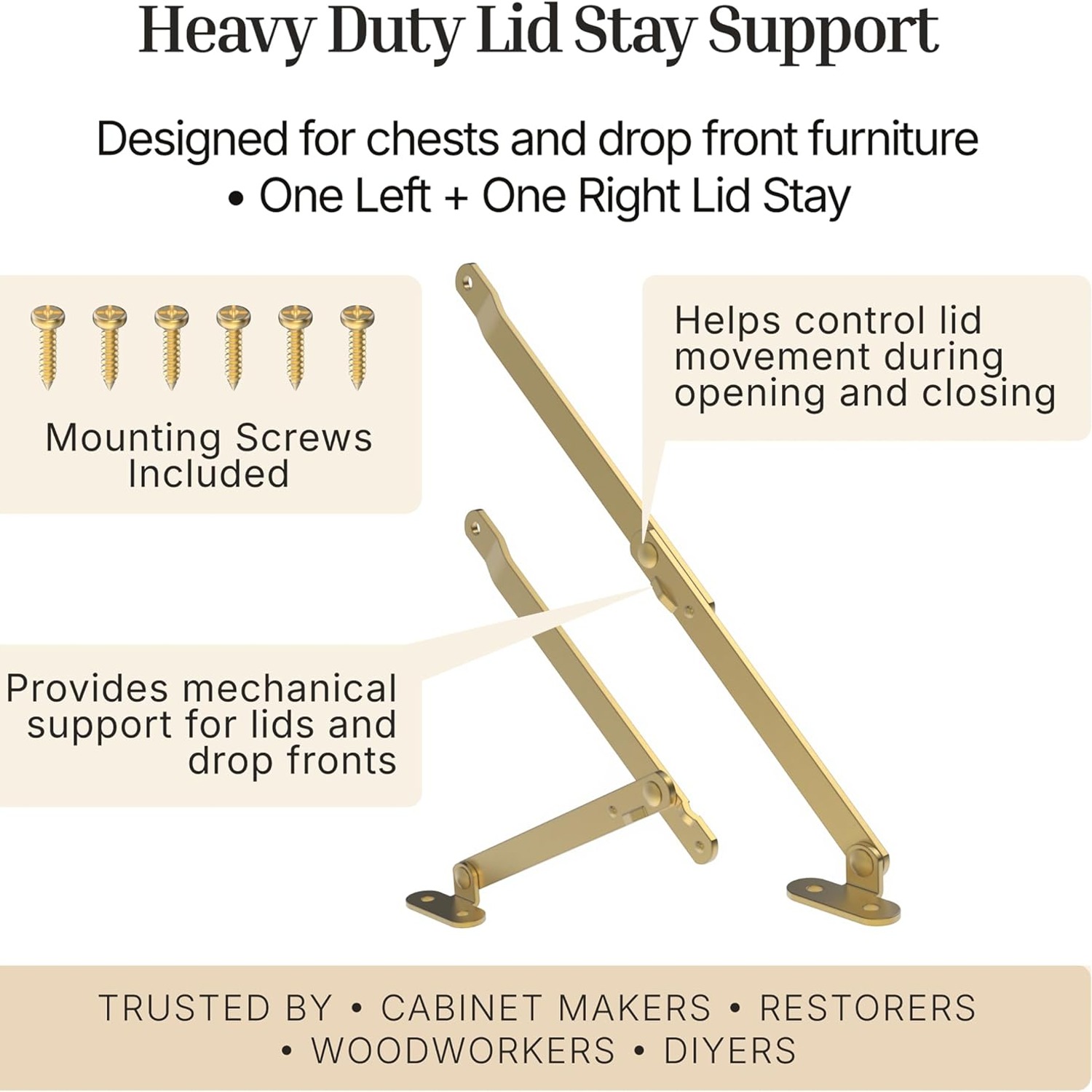
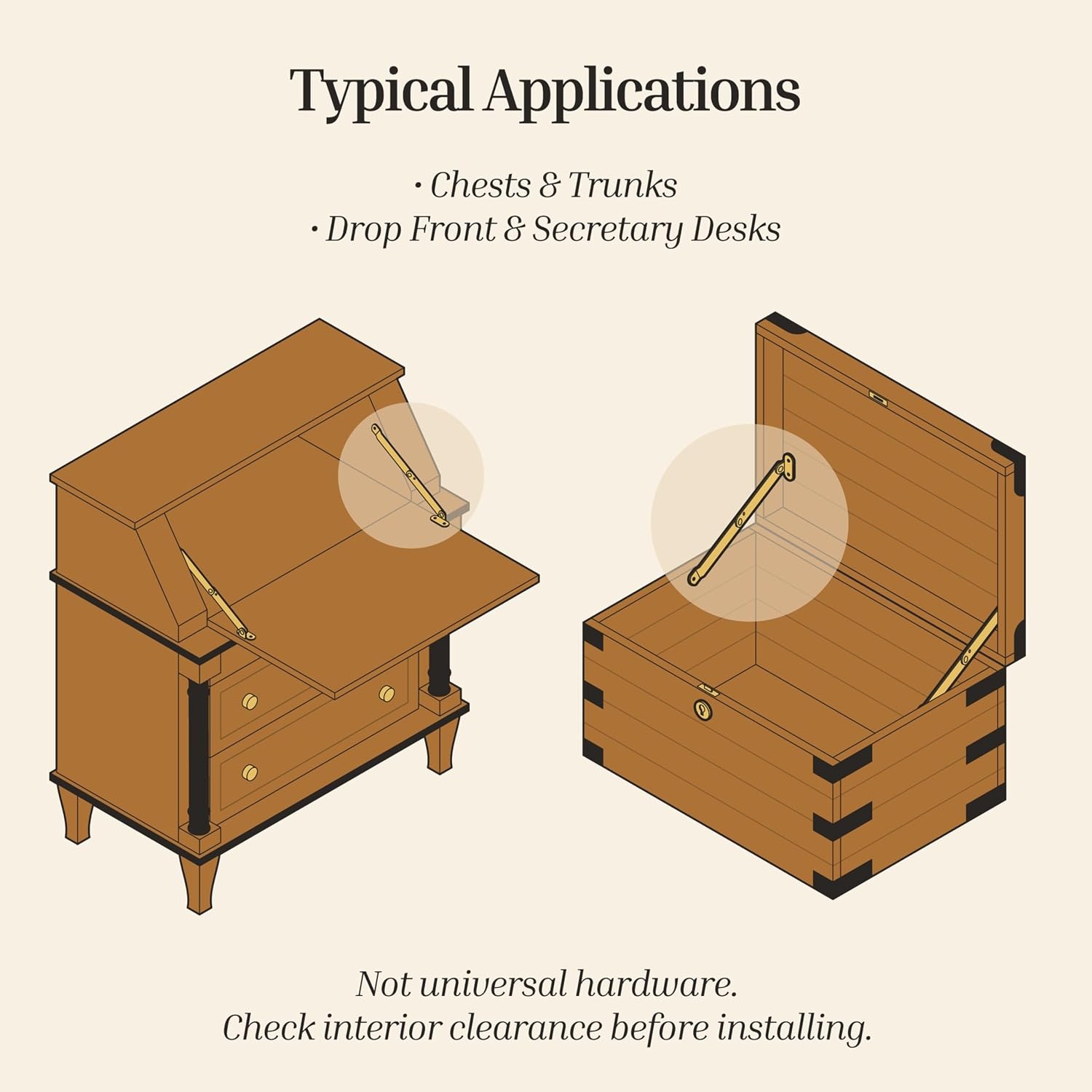
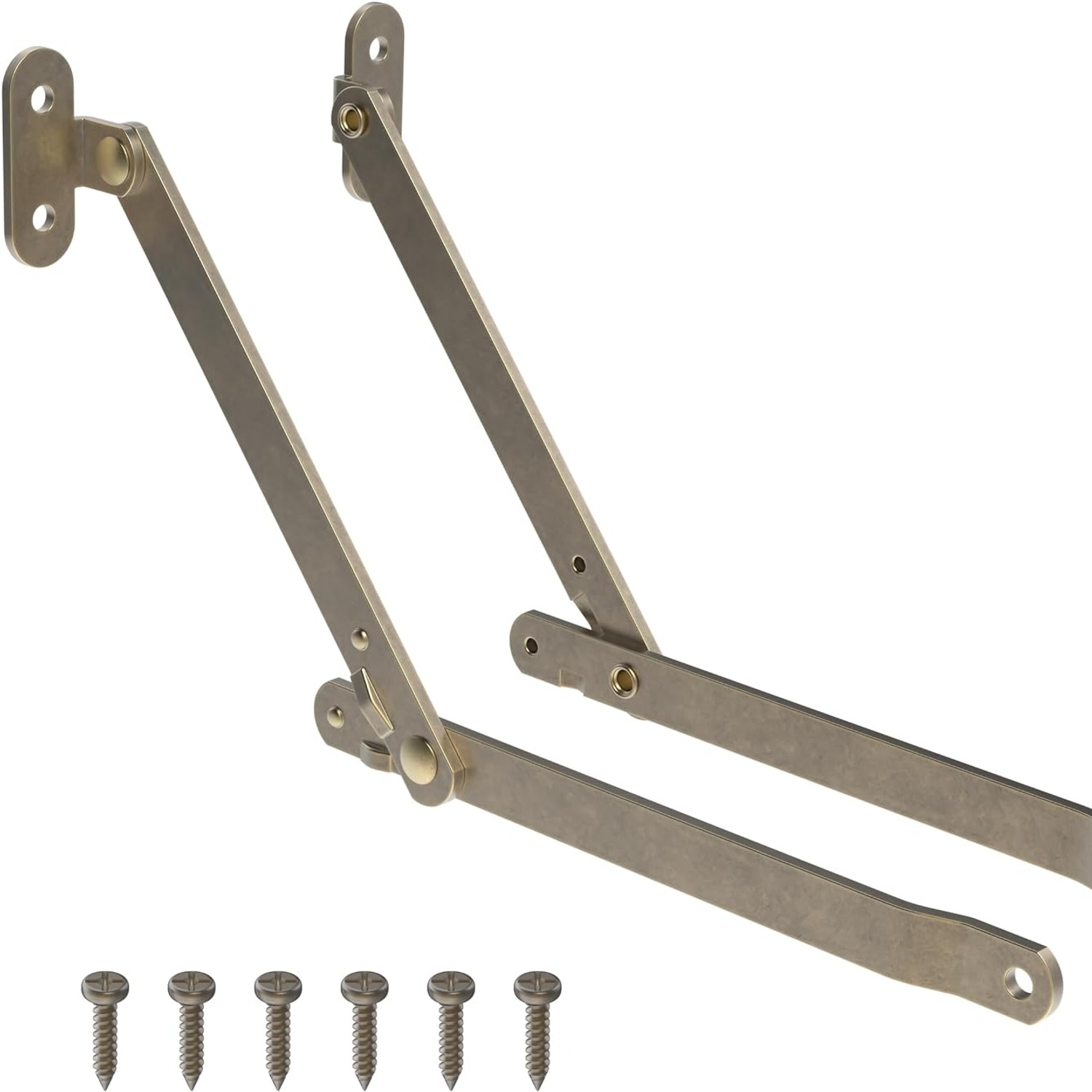
This lid stay hinge set contains one left and one right support, with mounting screws. The supplier lists uses on drop-front desks, cabinets with drop-down tables, chests, trunks, boxes, and display cases. That gives you several possible applications, but it does not mean the pair will fit every piece in those groups.
The useful starting points are the listed size, the brass plated finish, and the paired format. The next step is checking what your furniture needs.
Understand the role of a lid stay
A lid stay works as part of a moving furniture assembly. Depending on the design and mounting arrangement, it can support a panel or help define how far that panel travels. Its position in relation to the main hinges matters as much as the length of the arm.
Do not assume that a support also serves as the main pivot hinge. Look closely at your existing furniture. Identify which fittings let the panel turn and which fittings carry or limit it once open. Taking clear photos before removing anything can help you keep track of those roles.
This record does not specify soft-close action, a locking mechanism, or an opening angle. If you need any of those features, confirm them before buying. A brass plated lid stay should not be treated as a safety damper simply because it sits beside a lid.
Check the measurements that are provided
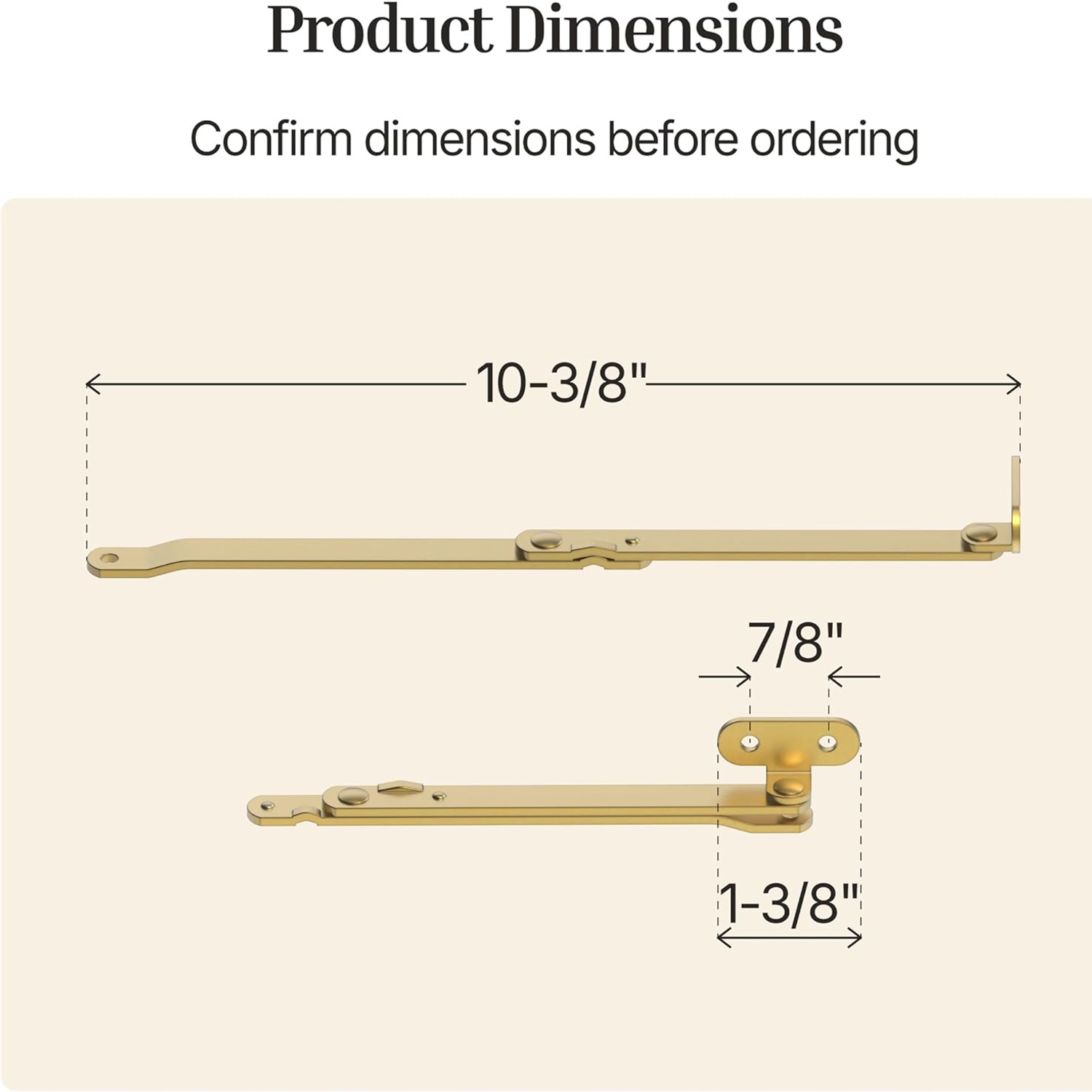
The listed overall length is 10 3/8 inches, and the arm width is 9/16 inch. The product details also give 26.4 cm by 1.4 cm. These are useful comparison measurements when you are sorting through replacement lid stays.
Measure the old hardware while it is safely accessible. Note its overall length and width, then record where it attaches to the furniture. If the old fitting is bent, avoid treating its current shape as a reliable template.
Overall length is not the same as mounting-hole spacing. This record does not give the distance between hole centres, the thickness of the supports, or their full movement envelope. Two fittings with similar lengths may still need different mounting positions.
For that reason, avoid drilling new holes based on the listed length alone. Check the actual hardware against the project first, especially where a small change could stop a front panel from closing flush.
Look beyond the brass finish
The supplier describes steel construction with a brass finish. These are brass plated supports, not supports described as solid brass. That distinction helps you make a fair comparison with other brass finish furniture hardware.
A plated finish may suit the look of a traditional desk or trunk, but an exact match to older fittings is not guaranteed. Existing handles and hinges may have changed in appearance over time. Compare the product images with your furniture in good light before deciding how close a match you need.
On a repair where both supports are visible, replacing the pair may give a more consistent appearance than mixing one new fitting with an old one. Still, appearance comes after fit. Matching colour cannot make an unsuitable mounting layout work.
If you are restoring a valuable piece, ask a restorer whether changing the hardware is appropriate before making permanent changes.
Decide whether your project is a suitable candidate
Drop front desk hinges and supports need careful selection because the open front may also act as a work surface. The supplier lists drop-front secretary desks as an application, but no working load is stated. Do not assume the pair will carry a particular amount of equipment or pressure.
The same caution applies to drop down table supports. Consider what will rest on the table and whether anyone might lean on it. You need a confirmed capacity for the intended use, not a guess based on the appearance of the metal.
For chest lid supports or trunk lid hardware, think about the weight and movement of the lid. A large lid can create a different demand from a small box lid, even when the hardware looks similar.
Smaller projects also need checks. Wooden box lid supports must fit within the available space, while display case lid hardware must have suitable fixing surfaces. The supplier's application list is a starting point for assessment, not proof of compatibility.
Treat missing safety details as important
Some missing details are minor. Others affect whether a product belongs on your project at all. Here, load capacity, locking action, and closing speed are not listed by the maker.
That matters most when someone could be hurt by a falling lid or an unsupported front panel. If the project needs controlled closing or a positive hold-open feature, choose hardware with those functions clearly confirmed. Do not try to make up for an unknown rating by assuming two supports provide enough strength.
A child's toy chest deserves particular care. This record provides no child-safety testing or anti-slam specification. Choose purpose-suitable hardware with confirmed safety information rather than relying on this general furniture support listing.
If you cannot establish the required performance, ask a furniture repair professional to assess the project.
Plan the mounting before reaching for a drill
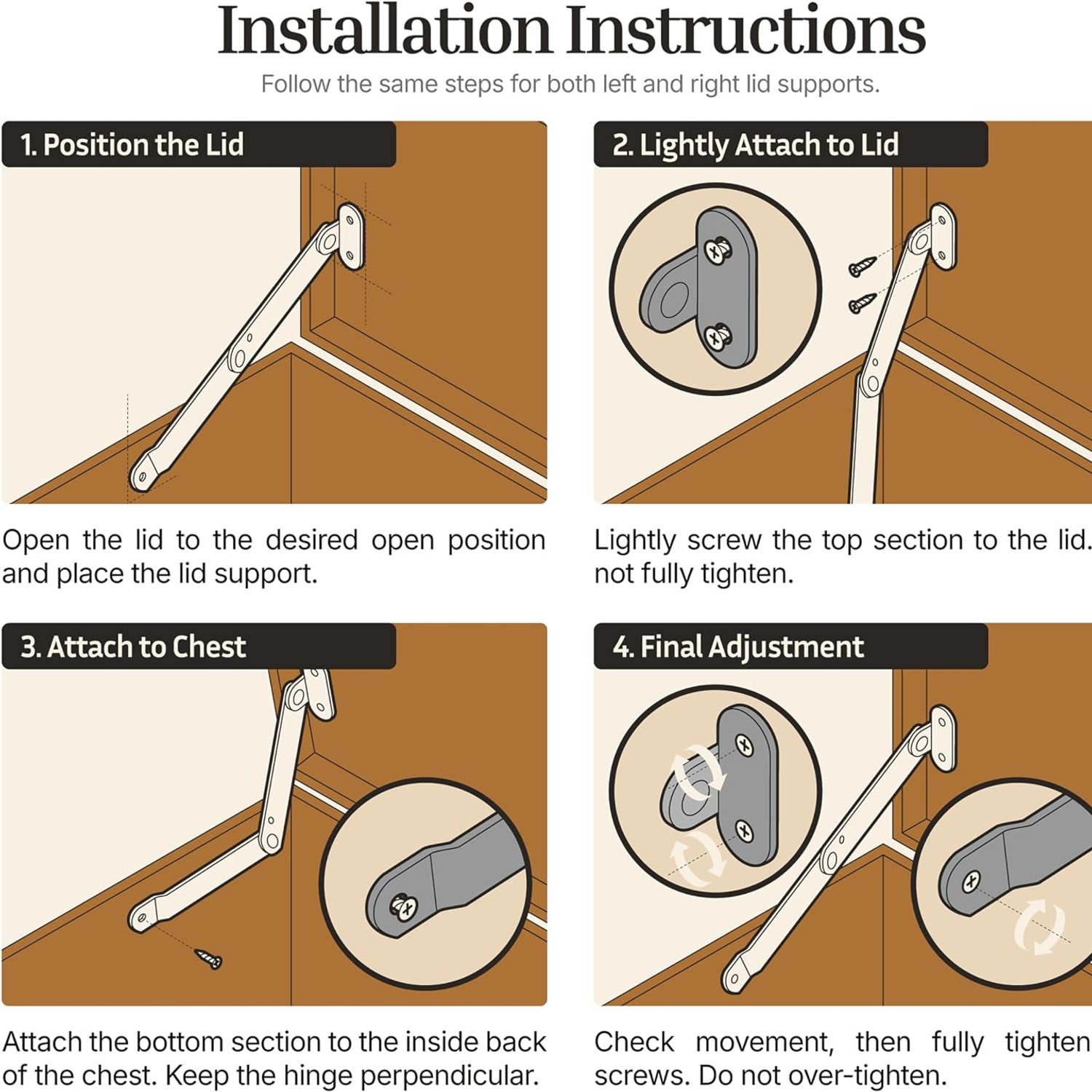
The package includes mounting screws, which is useful, but their dimensions are not supplied. Check them against the furniture before use. A screw that is too long could damage a visible surface, while a poor fixing may not hold securely.
Look at the condition of the mounting area as well. Old holes, cracked wood, and thin panels can all affect a repair. Changing the support does not repair a weak fixing surface.
The maker's listing lists a hole count of two without explaining its distribution across the pair. It also gives no fitting template. Check the actual left and right supports, their fixing points, and the space needed during movement before marking any holes.
Keep the lid or front safely supported while assessing the fit. If holding it safely is difficult, get help rather than trying to manage the panel and tools at the same time.
Take extra care with older furniture
Choosing secretary desk hardware for an older piece often involves more than finding a similar silhouette. Original mounting positions may be part of the furniture's history, and altering them can leave visible marks.
Before removing the old supports, photograph each side and note how the pieces sit when open and closed. Keep the old hardware until the replacement has been checked. Even a damaged part can help explain the original arrangement.
For antique furniture restoration hardware, a close visual match is useful, but preserving the piece may call for a different approach. A restorer can advise whether to repair the original fitting or fit a replacement.
This support pair is listed for both new builds and replacement work. Which route makes sense depends on the furniture, its condition, and the fit you can confirm.
Care for the finish and watch the fixings
Basic care should be gentle. Remove dust with a soft, dry cloth, and avoid abrasive pads or cleaners that could mark the plated surface. Keep the hardware dry rather than leaving moisture around the joints and screws.
After fitting, pay attention to changes in movement. Catching, looseness, or an uneven panel can be a reason to stop and inspect the assembly. Do not force a stiff lid or drop front through its travel.
Check mounting points periodically, especially on furniture used often. If screws loosen again after attention, the fixing surface may need assessment rather than repeated tightening.
No specific lubrication method is supplied in the maker's listing. If the mechanism needs attention, seek suitable guidance instead of applying a product that could affect the finish or surrounding furniture.
The short version
This M-108 lid support hinge pair offers left and right steel supports with a brass plated finish and mounting screws. The listed size is 10 3/8 inches overall length by 9/16 inch arm width.
It is worth considering for compatible desk, chest, trunk, cabinet, or box projects. Before ordering, confirm the mounting layout and movement, and establish any required load or safety performance. The right choice is the pair that fits the job, not simply the pair that looks closest.